We the ‘city dwellers’ living in concrete jungles are very choosy about our daily diet. However, while eating, do we ever really ponder over the source of our food? If one looks closely at the food served on our tables, apart from cereals, be it fruits, nuts, beverages, or vegetables; almost 75% of the food we consume comes as a product of pollination service. But alas! We seldom realise the importance of this crucial ecosystem service in our everyday life as well as in the greater economy of our country. The knowledge that most of us possess is from our 6th-grade botany textbook, which only mentions the movement of pollen from anthers (male part) to stigmas (female part) to complete the reproductive cycle of the plants. Unfortunately, the education system rarely emphasises the fundamental role of plant-pollinator interactions in sustaining the ecosystem as well as the agro-economy.
Diverse taxa from the animal kingdom ranging from bees, butterflies, and birds to bats actively indulge in this subtle, yet crucial process. Among them, honeybees form the dominant class of pollinator taxa. Usually, the bees – straddling between agricultural and semi-natural or wild areas in search of food and nesting sites – unknowingly provide this free essential service. This system has been industrialised in western countries by maintaining bees in bee boxes, which are then exclusively used for pollination in vast agricultural tracts. During the non-cropping seasons, due to the lack of such agricultural resources, the semi-wild patches become very crucial in the sustenance of the pollinator lifecycle by providing them with food and habitat. Sadly, owing to urban sprawl and developmental activities, these small, undisturbed patches are slowly vanishing away. This alters the matrix quality in which the farms are embedded, creating a discontinuity between wild areas. Consequently, not only are the pollinators deprived of their food and nesting sites, their movement is hindered too.
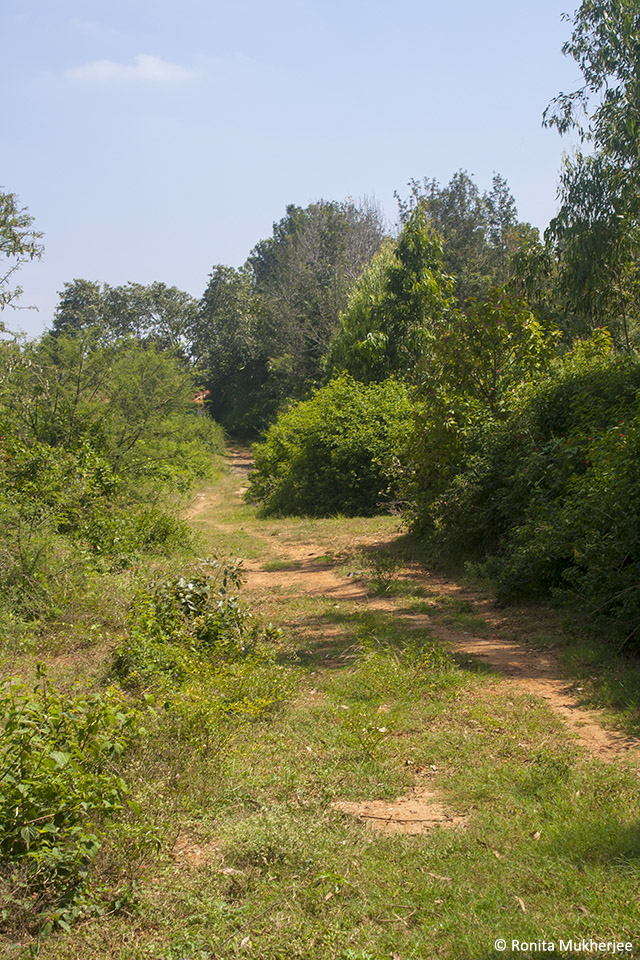
A small trail dissecting a semi-wild area
Cities, as always, have fulfilled their necessities by drawing supplies generated through pollination services from the hinterlands. As cities expand, incessant pressure has been created on the peri-urban fringes to produce more and cope with the ever-increasing demand. This, in turn, has paved the way for intensive commercial cropping using inorganic insecticides and fertilisers, abandoning many traditional farming practices.
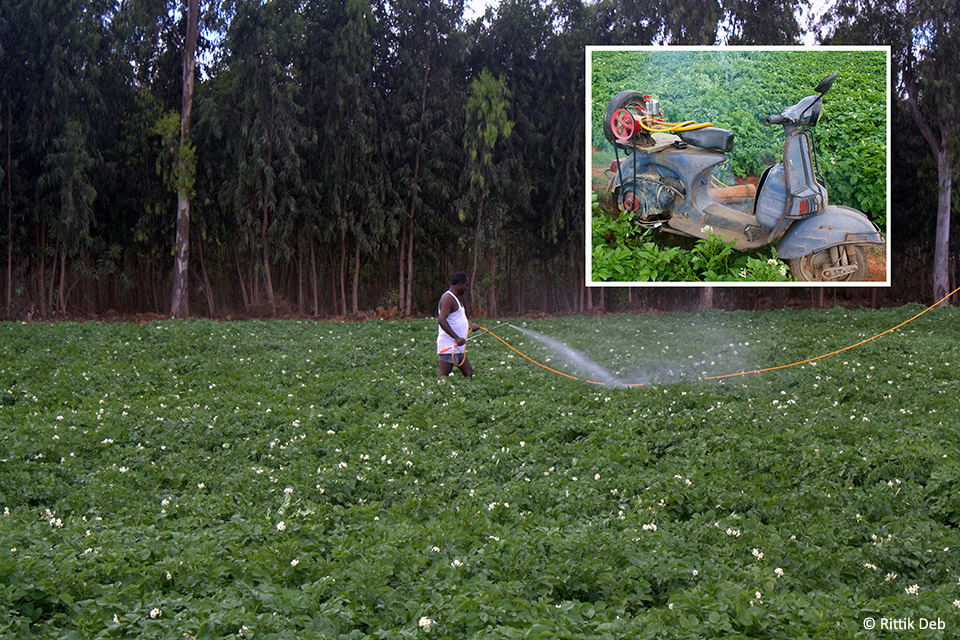
Intensive inorganic farming practice – the spraying machine is shown in the inset
In addition to that, due to the huge demand for certain varieties of crops, mono-crop-dominated farming has become a common practice rather than multi-cropping. The situation becomes graver in the context of developing countries like India, whose economy is strongly based on its agricultural produce. Among all the growing metropolitan cities of India, Bangalore has witnessed the pinnacle of urban development in recent years. Once termed the “Green City”, it has rapidly transformed into the “Tech-City” and has expanded enormously too. Mushrooming of IT industries in this city has led to a huge population influx, enhancing the urban demand manifold, thus, burdening the surrounding production landscapes.
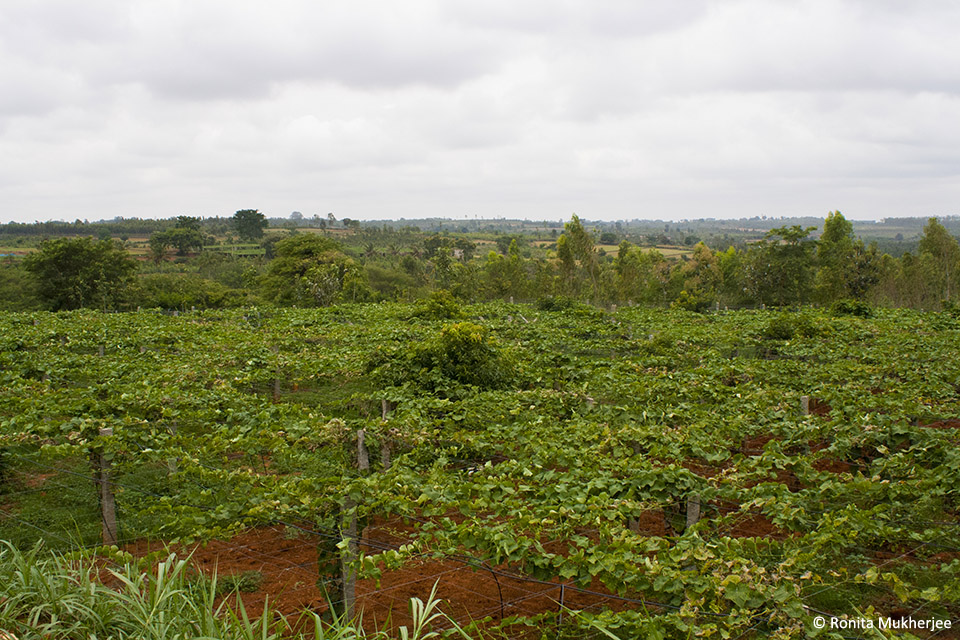
Mono-culture farm
Anekal taluk, located at the confluence of Bannerghatta National Park and Electronic City, is one among many such peripheral areas and is bearing the brunt of Bangalore’s unrelenting urban demand. Once located far beyond the outskirts of the city, the rapid expansion of Bangalore has bridged the distance and has begun to slowly engulf the taluk.
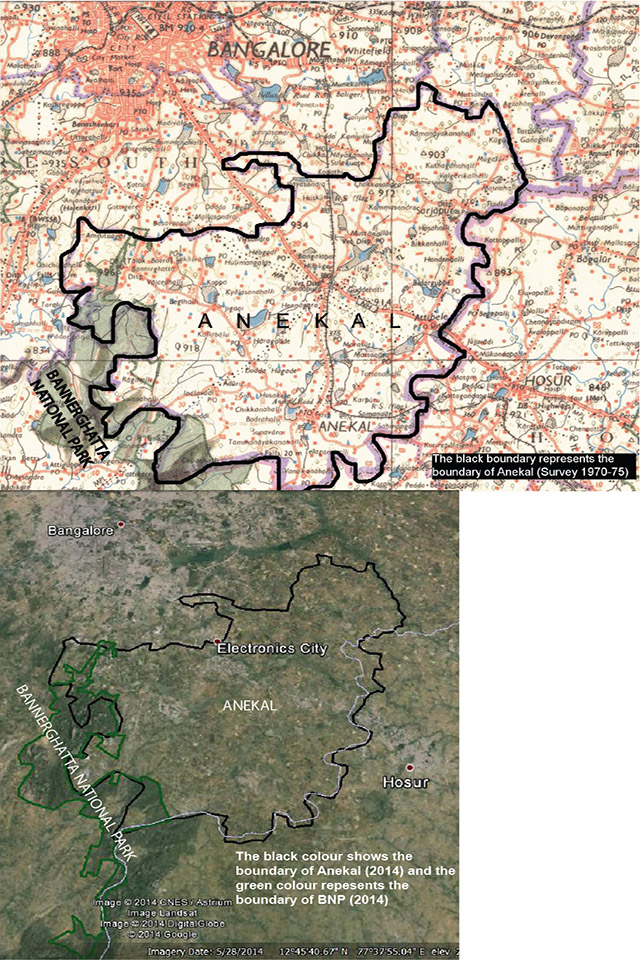
Anekal taluk past (1970) and present. Bangalore, once quite far away from the taluk, is now touching its border; Survey of India toposheet, Google Earth
Being one of the principal vegetable hubs, this region provides a wide range of vegetables of the gourd variety, ranging from bottle gourd (sorekayi), squash (seemebadanekayi), brinjal (badanekayi), ridge gourd (heerekayi), bitter gourd (hagalakayi) to pumpkin (kumbalakayi) apart from important millets like sorghum (jola) and ragi. Largely driven by urban demand, a majority of this region has started growing similar kinds of crops of high market value, completely abandoning their traditional practices of multi-cropping which included a larger variety of vegetables along with pulses. Floriculture has also become a predominant practice in this region as it fetches better economic returns. It has replaced food crops, which might have serious implications on food sovereignty.
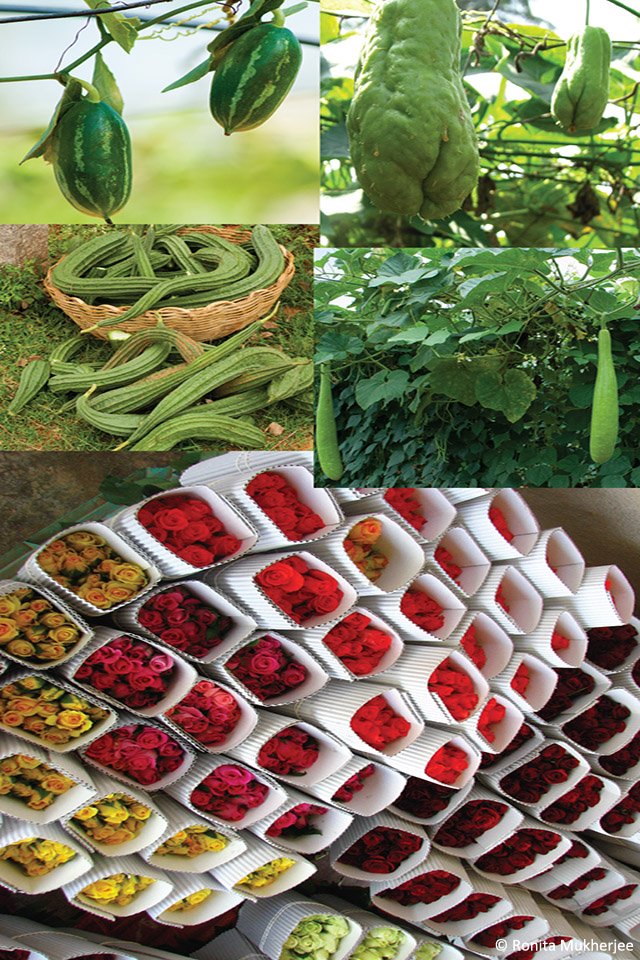
Diversity of crops produced in Anekal. Presently there is a shift towards extensive floriculture abandoning food crops
Moreover, the recent status upgrade of Anekal from Bangalore Rural district to the Bangalore Urban category has taken a toll on this highly productive agricultural landscape by rapidly modifying it into a real estate sector. The fertile lands are giving way to multistoried buildings, layouts and special economic zones to accommodate the urban populace and their needs.
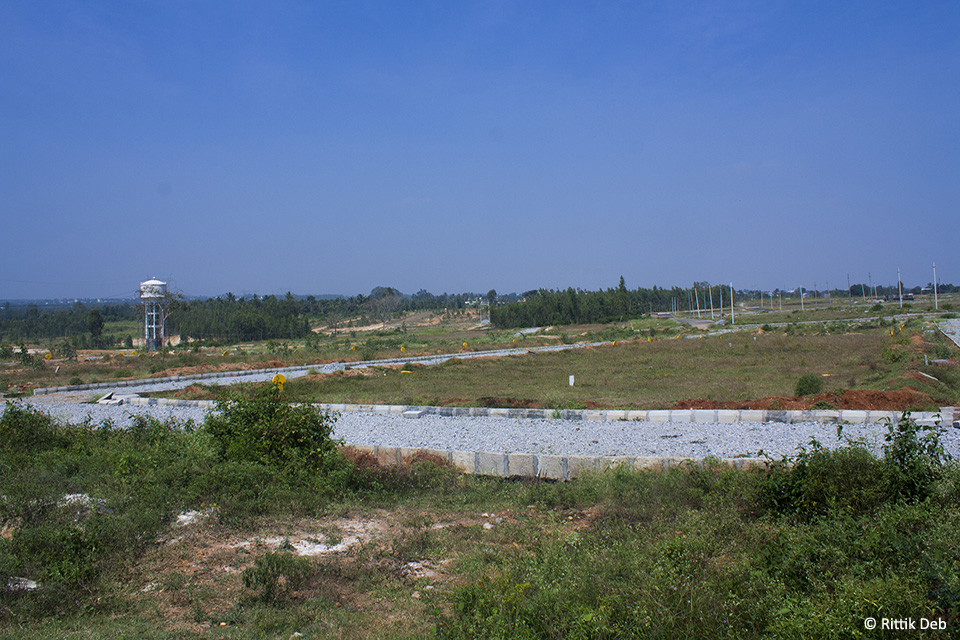
Huge fertile tracts transforming into layouts for bungalows and multistoried buildings
The situation is grim because, not only will it upset the agricultural dynamics jeopardising the pollinator guild, but also will have severe consequences on the food and nutritional security of the dependent communities.
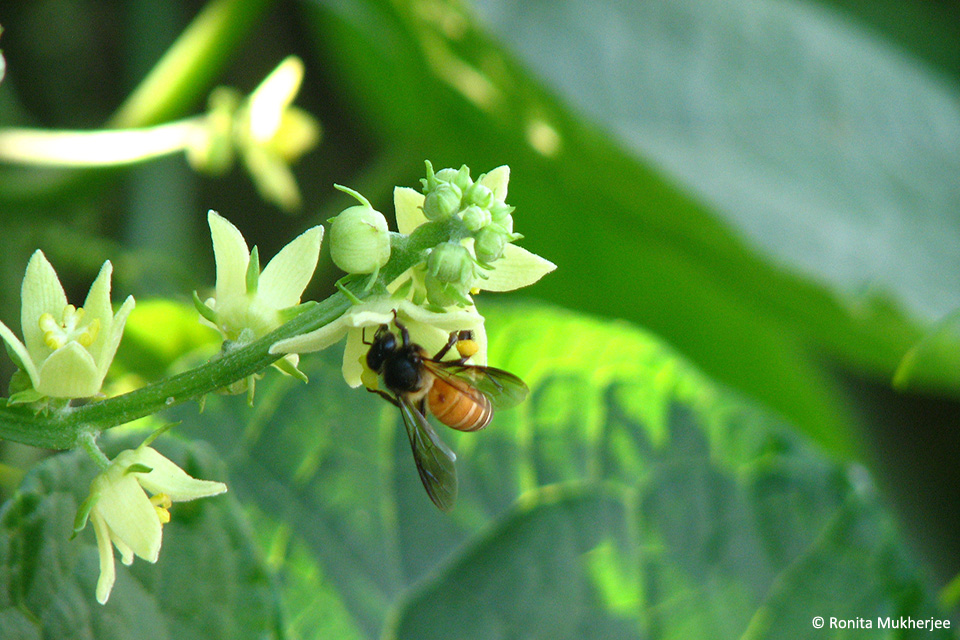
Apis dorsata visiting Chayote squash (Seemebadhanekayi) flowers
So far there has been a general notion that organic farming is the best plausible way out to conserve pollinators and maintain their service. However, recent studies have speculated that organic farming solely cannot sustain the present agricultural produce and pollination service in the long run. These studies have hypothesised that the matrix quality of the surrounding patches might also play a vital role in the pollinator flow and sustenance of the service. Moreover, to conserve the wilderness along with the agricultural landscapes, some recent concepts like ‘locavory’ could be adopted to minimise the huge dependency on these peri-urban fringes. Locavory is the system where people of an area will principally consume and sustain on food grown within 100 miles. This will help not only to reduce the pressure on certain areas for large-scale production of specific types of crops but will also increase the agro-biodiversity across the country. Apart from that, the loss incurred in the transportation of these perishable vegetables across long distances as well as their carbon footprint can be abated. Sustainable urban farming can be another option to overcome this heavy dependence. Cities can set aside certain small pockets of green areas within their limit for agricultural purposes and grow a variety of crops to meet the city’s demand rather than importing them. Hence, along with being choosy about our food, the onus is also on us the “City Dwellers”, apart from the farmer communities, to come up with intelligent and elegant concepts to create a long-term sustainable system that maintains the fine balance of nature.




Instagram
junglelodgesjlr