Why nature photography?
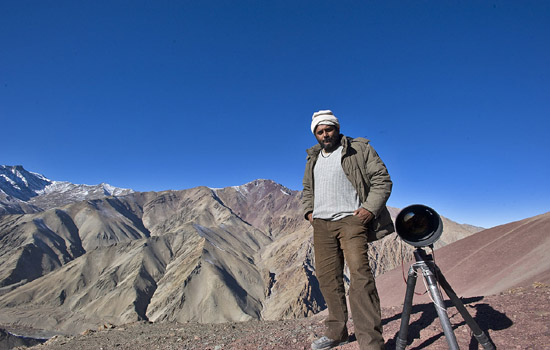
I have fond memories of my childhood; I spent those early days of my life like a free bird. Playing for long hours in fields, climbing and hanging from trees, swimming and mudding in nearby ponds and jumping into water from a height, were what I liked to do most. My parents were not persistent about my being the best student in class; rather, they wanted their son to be a free-spirited, good human-being. After I finished school, I started rock-climbing, trekking and mountaineering, and about five years later I was introduced to bird watching and started photographing birds. When it was time to be serious about my career, I realised I couldn’t do a job which would take me away from the life I loved. I wanted to be amidst nature and planned to make nature photography my full-time profession.
What’s the best part about it?
Nature has never-ending surprises in store. Every day spent with nature teaches me something new in the field. The most thrilling part is that I’m in love with my work and never get bored or de-motivated as I am surrounded by nature’s immense beauty. I enjoy this life thoroughly and it keeps me away from the complexities of the human world.
What’s the worst part about it?
Nothing, except everyday financial constraints. Since nature photography is not self-sustaining in our country, till date, I struggle to be in the field for my work, which I do about 260 days a year. To upgrade my camera gear and buy under-water gear, I had to wait for an award.
What are your favourite species and places in India?
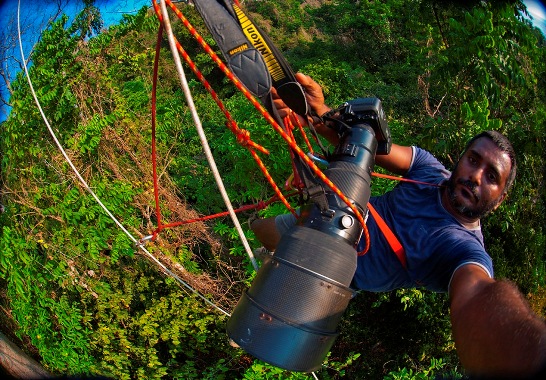
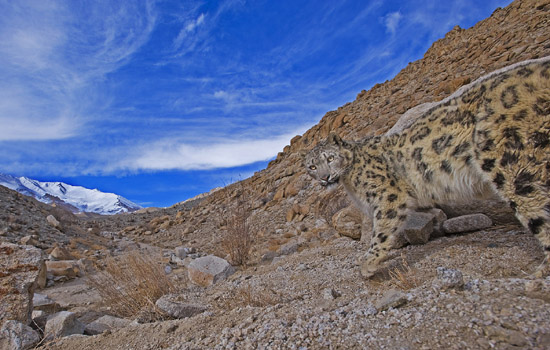
This is a difficult question to answer. All species and places have their own charm; I can’t compare one with another. I’ve mostly worked in the Himalayas but I love the Western Ghats too. I love working in deserts, rainforests, mangrove ecosystems and alpine meadows; they’re all very close to my heart. I love working on species which are less-photographed or not photographed at all.
What do you see as your most satisfying accomplishment so far in the field of photography?
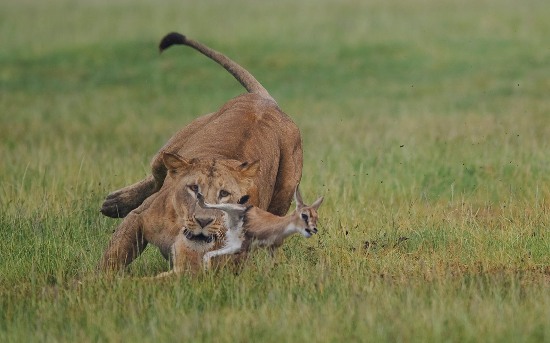
Working in the field as long as I want to, being amidst nature and executing my dream frames are the most satisfying accomplishments for me. I feel humbled and blessed that I am living the life I desired.
What’s in the bag of equipment ?
I have no equipment bias. I mostly use Nikon systems. The list is given below:
Cameras:
Nikon D2Xs
Nikon D800E
Nikon D7000
Nikon D700
Nikon D7100
Lenses:
Nikon AF S17-35 f-2.8
Tokina 10-17
Nikon AF 24 mm F/2.8
Nikon AF 50 mm F/1.4
Nikon AF 150 mm F/2.8 VR ED macro
Nikon AF s 70-200mm F/2.8 VR ED
Nikon AF s 400 mm F/2.8 ED II
Teleconverters:
Nikon TC 20 E II Tele Converter
Nikon TC 17 E II Tele Converter
Nikon TC 14 E II Tele Converter
Tripods:
Gitzo 5540 LS
Wimberley Head
Arca Swiss Ball Head
Under Water Gear Ikelite Housing and Strobe System
What is your photography strategy before you take on an assignment and then in the field?
I select my place of work or subject depending on how much that subject or place has been explored before. My only priority is that whatever I do either contributes to natural history, or is so visually different that it can create an impact on the viewer. To do that, I try to collect all possible information available about them and then I study work that has already been done on them. I don’t want to repeat anything. Then, on the basis of that information, I try to plan my frames. Sometimes, I draw it and then execute the plan. To me, my work is important; not money or fame.
Your specialities and skills?
I think my speciality is that I am very cool about my work. There is no success or failure for me and I don’t think of it as competitive work or expect any kind of return. This eases pressure on me and I derive pure enjoyment from my work. So, even if I need five attempts to see the Western Tragopan or seven attempts to spot a Brown Bear, all while trekking in difficult terrain in the Himalayas for more than 20 days each time, spending lot of a money and returning empty handed, I am neither depressed nor in any agony. I enjoy and learn. From that learning, I make my future plans. I think that is my strength.
3 tips for beginners:
Always keep yourself updated with others’ work to know what has been done. Instead of trying to photograph a similar image, try something new. Don’t repeat anything.
Realise that while making images, equipment is like a tool, just as a brush is in painting. At the end of the day, you have to create the image. So, instead of getting very involved in equipment, try to be inspired by natural history, learn to see subjects and light in a different way, and develop your imagination. These are the things which will help better your photography.
Always plan a photo. If you visit a place and depend only on what you get, it will never help you become a good photographer. Give yourself a project and finish it. You can start with an easy subject and try ways of executing the project. Then, slowly make your subject difficult, as you gain knowledge and experience from previous projects.
What is the future for a nature photographer in India?
If we think of nature photography as a career option, it is extremely difficult. But if we talk about nature photography as a hobby, it will grow, as India has a unique natural heritage which will attract more people to nature photography.
Which is your best image and why?
I am still waiting for my best image. Honestly, to me, there are no best or worst images. I plan an image and after I get it, I might get bored after seeing it a few times. I always want to take a new one with new ideas and that is the force due to which I am still continuing with photography. When I get my best image, I will have nothing more to do and I will stop photographing. But if you ask me about memorable experiences in the field, I have many.


Instagram
junglelodgesjlr