A journey through the coastline of Karnataka is often a drive through the pages of an era bygone. Bathed in vivid green and blue colours as far as one can see, fishermen and farmers go about their business untouched by the vagaries of time. Cut off from the mainland by impenetrable mountains – the Western Ghats – all the way from Goa to Kerala, the coast exudes a feeling of nostalgia to captains of modern oil-tankers now, as they must have done to weary Arab travellers, centuries ago.
The Western Ghats comes as a relief to travellers headed to the coast from the plains, before they get overwhelmed by the salt-laden coastal heat; the ghats’ cool and fresh mountain air also provides succour to the coastline of Karnataka. As we travelled in the ghats, moods changed for the better, bodies acclimatised, and with fervour, we reached Anejhari Butterfly Camp at Kollur; this is also home to Mookambika Temple, the abode of Goddess Parvathi, located amidst a sprawling, dense, evergreen protected area. After a quick stop at the birding paradise run by Jungle Lodges and Resorts, we visited the ancient temple, where we were lucky to see the golden chariot, rarely available to public view.
From Kollur to Gokarna – a northward journey along the coast – we travelled on a series of inter-connected local buses; our senses awakened, we stared wide-eyed at picture perfect views. Lateritic soil is a distinct characteristic of the region, especially during the dry season, when the entire land turns dull red. Seeing my interest in this unique geological formation, my seat-mate helpfully explained the process of preparing bricks from this soil. A friendly driver at our last bus stop subsequently dropped us outside Jungle Lodges’ Om beach Resort, where the buildings exude a colonial charm. However, even before we could step inside, the evening sun dipped behind the cliffs like a faded fireball over the Arabian Sea, and we could not help but gape in awe.
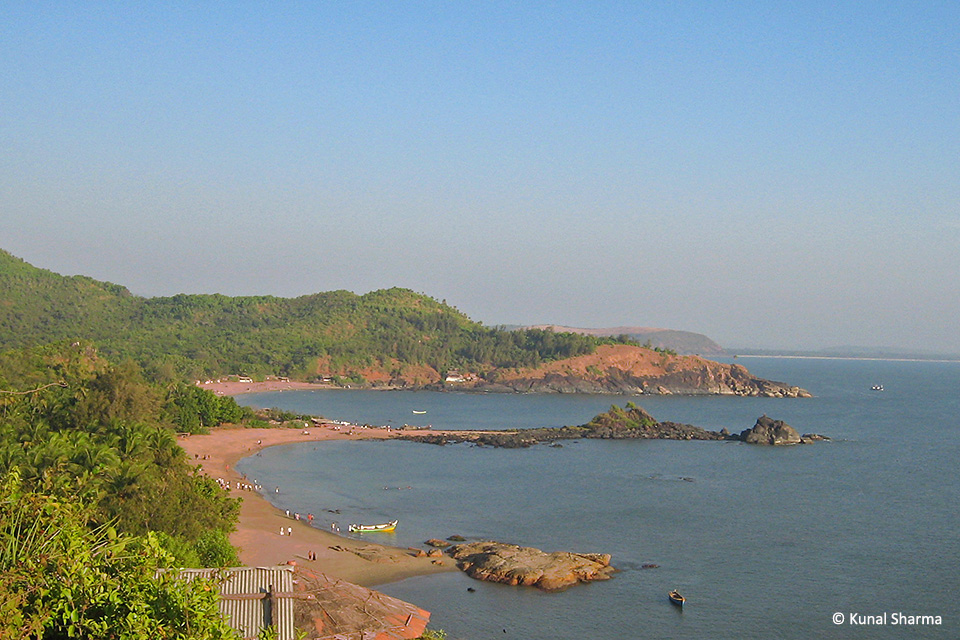
A view of Om Beach.
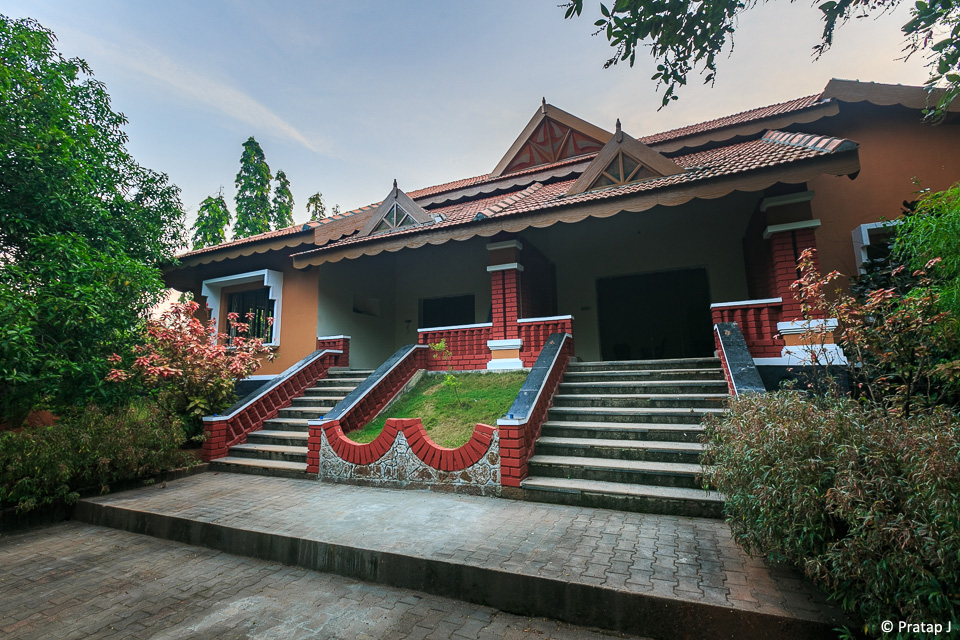
Cottages at Om Beach Resort.
The next morning, a short ride took us to the natural wonder that is Om Beach. Shaped like the ancient symbol ‘Om’, the relatively small beach had an electric ambience and an uncannily straight view across the oceans, all the way to Antarctica; its neighbour, Kudle Beach, is content to aim its attention westwards, towards Somalia. We ended up spending the entire day walking and reading, aware of the feeling of having done nothing, and yet being thoroughly content, all the while trying to analyse where a straight line from each of the natural beaches of Gokarna could possibly lead us to. The hype around Om beach is well-suited, for the tiny beach packs an overwhelming punch, especially in the evenings; we sat watching the silent beach once people had come, enjoyed the day, and left. We stayed on a bit longer, and then we too had to leave, bringing our day to an end.
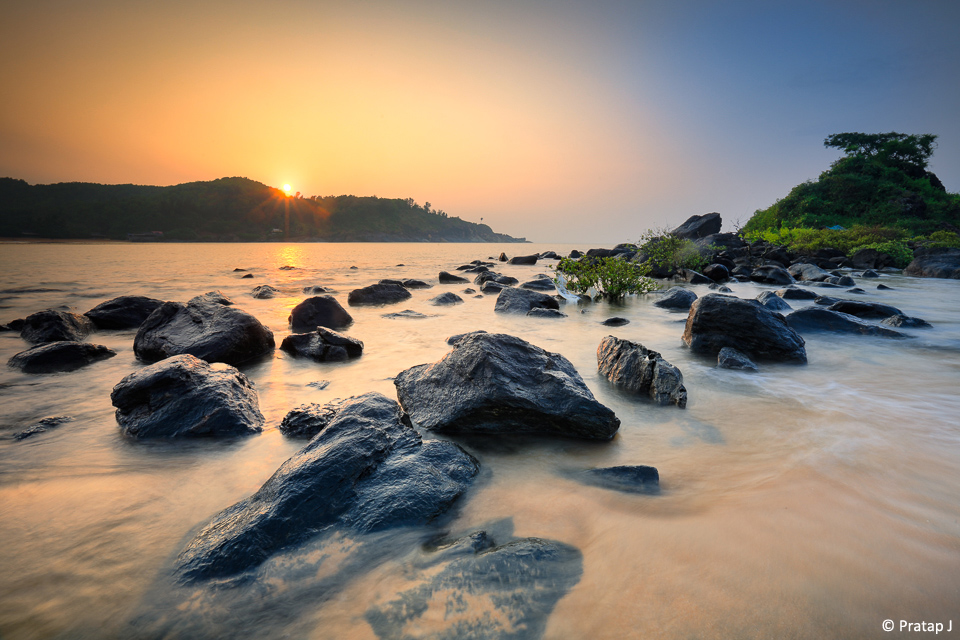
Sunrise at Om Beach.
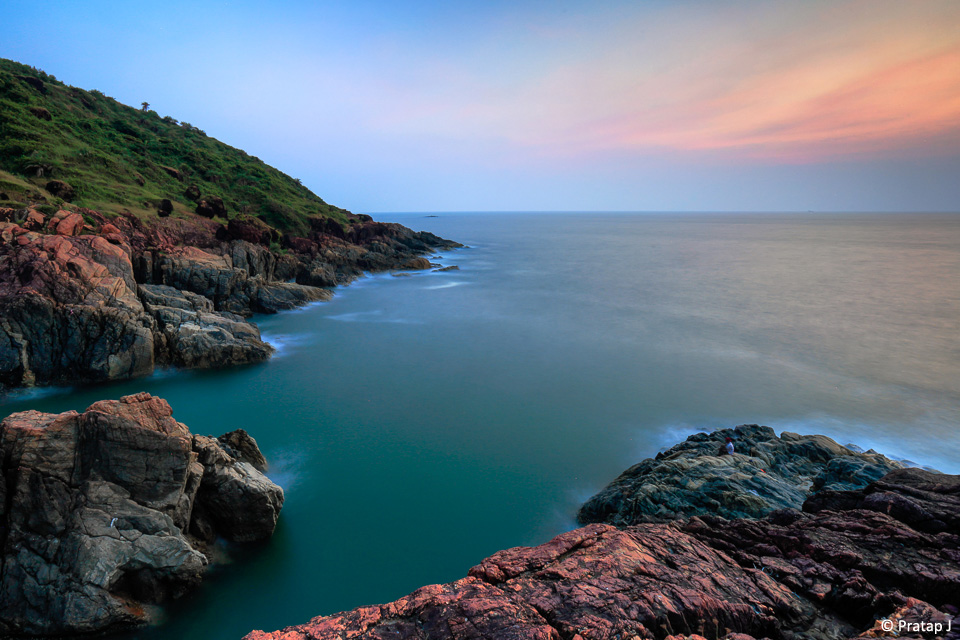
A quiet sunset at Kudle Beach.
The next day, we decided to go on a little adventure. Climbing up from Om Beach, we walked by the cliffs. Almost immediately, the resemblance of the beach to the Om symbol became apparent. Feeling surreal is the emotion that recurs frequently at Gokarna, and this view of the beach was truly so.
We could not stare at the beach for long, as the trek had just begun and we had a long way to go. Along the route, we reached a high cliff that was jutting out directly into the sea, exposing us to some fierce winds and an impossibly beautiful land. The beaches of Gokarna are renowned for gently sloping hills, interspersed with headlands that jut out abruptly and often steeply into the sea below. This unique interface had a dense assemblage of shrubs and rocky outcrops, and we had to tread carefully through these remote stretches.
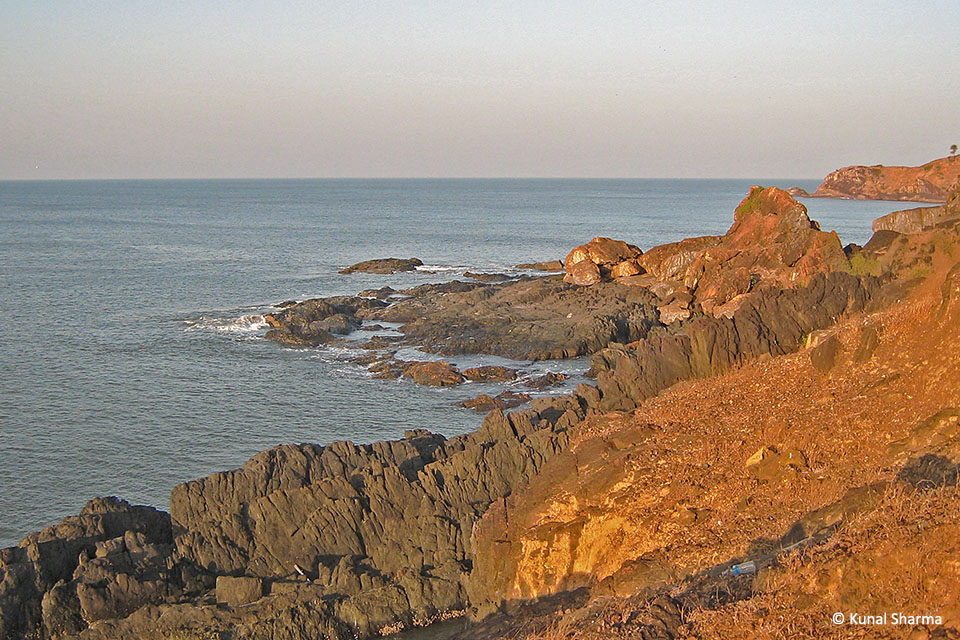
Views from the trek path.
Our adventure took us through some well-treaded paths that appeared to be a sort of an animal highway. Frequently, we were blessed with views of weathered rock formations – geological and natural forces at their best. Resting on one such outcrop and finishing our entire stock of water, we were thankful for the overcast sky because this exposed landscape had few trees for shade. We resumed walking, passed by Kudle Beach, and reached Gokarna Town, all within four hours of beginning the trek.
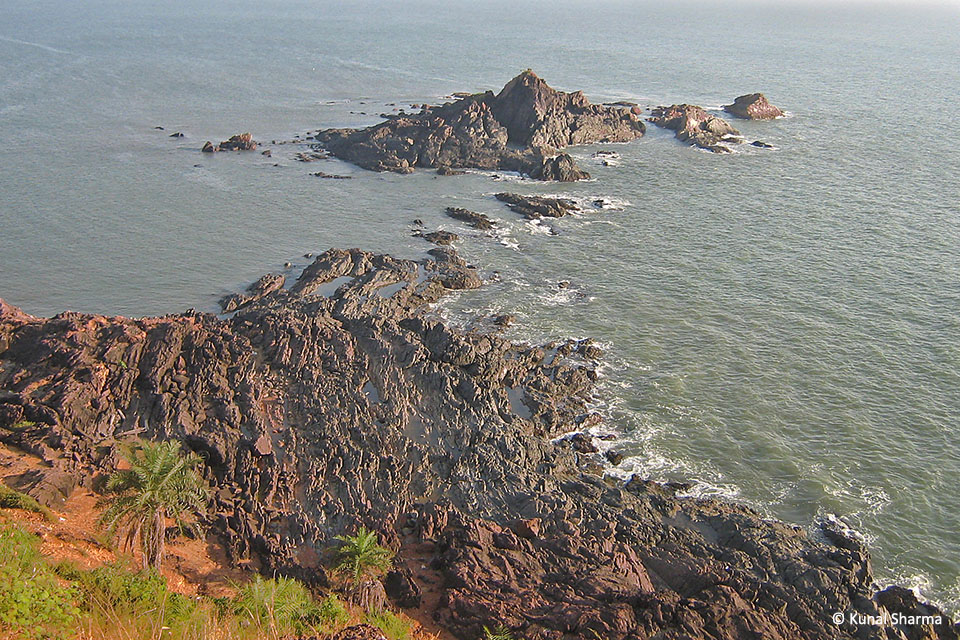
Rock formations along the coast.
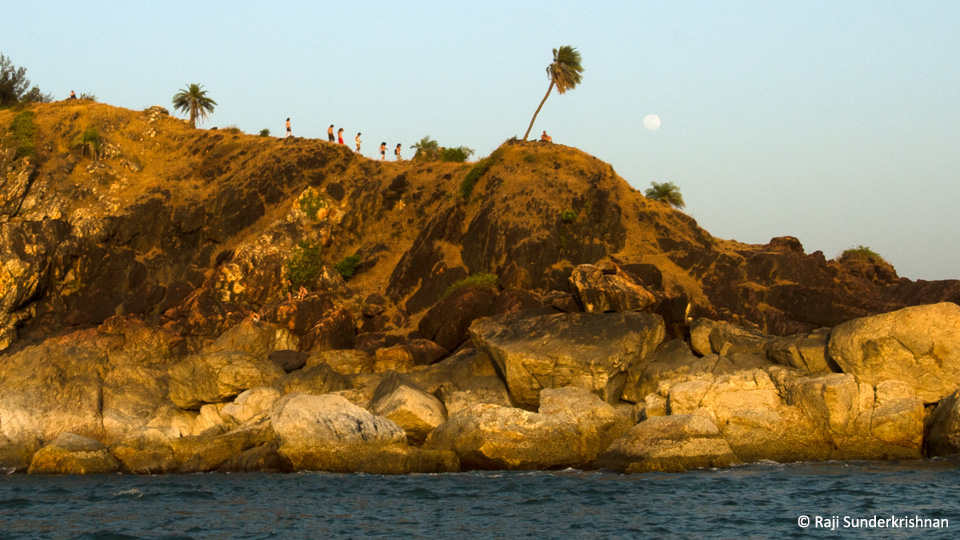
Tourists on a cliff, in the evening.
Our plan had been to pay obeisance at the temple, which had closed by then, but we were well in time for sumptuous evening snacks. Chatting by the tea stall, some locals advised us to visit Gokarna’s railway station. Though tired, we were intrigued by their suggestion, and readily hailed an auto to the station. This proved to be sound advice and one worth recommending to all those who visit Gokarna – the station has a charm of its own, and we were also able to see indigenous Halakki women, carrying large baskets of fish balanced precariously on their heads.
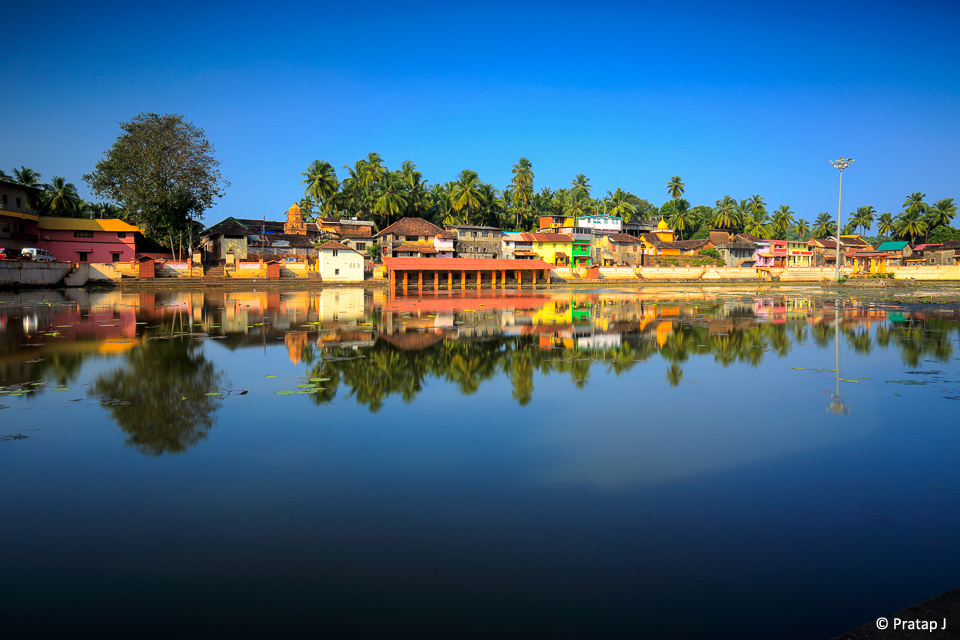
Koti Teertha, a large manmade pond in Gokarna Town.
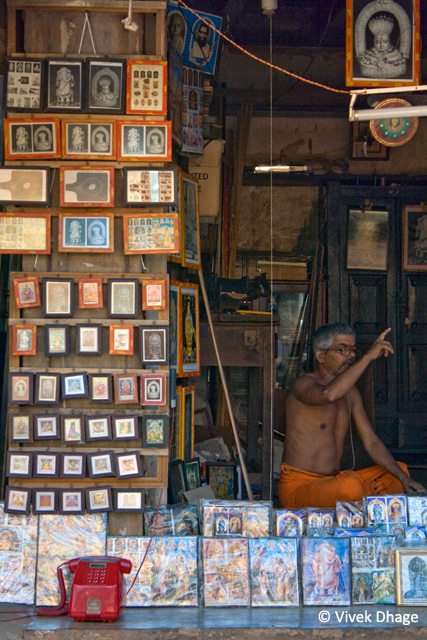
A shop in Gokarna’s Car Street.
The next day was equally interesting – we drove all the way to Karwar on a scooter, in heavy rains. I suggest being very careful while selecting a scooter and only hiring one that is recommended by the resort. We refrained from going to Goa, although it is nearby. Returning in time for lunch, we spent the rest of the day interacting with the affable staff at the resort. Gokarna deserves the complete attention of a visitor, and though beautiful places such as Yana and Mirjan Fort are nearby, we decided to visit them the next time.
The trip to Gokarna turned out to be a revelation and we attempted more treks in this lovely region. It taught us the art of sitting silently, admiring the beauty of nature, and appreciating moments of soundless contemplation. We hardly hurried, and though we made several trips to the beach, it was usually to absorb the immenseness of the ocean while reading and dozing in equal measures. On our way back to home from the holiday, the strong effect of Gokarna’s charm lingered on. And the decision to make an unrestricted plan proved right.


Instagram
junglelodgesjlr