For a good part of the last quarter century, many would know of Dr. S V Narasimhan as the man who painstakingly and meticulously painted post cards with conservation messages and sent them out to people. He has been doing this for several years tirelessly, and continues to do so. He has also quietly made it to the Limca Book of Records for this mammoth effort.
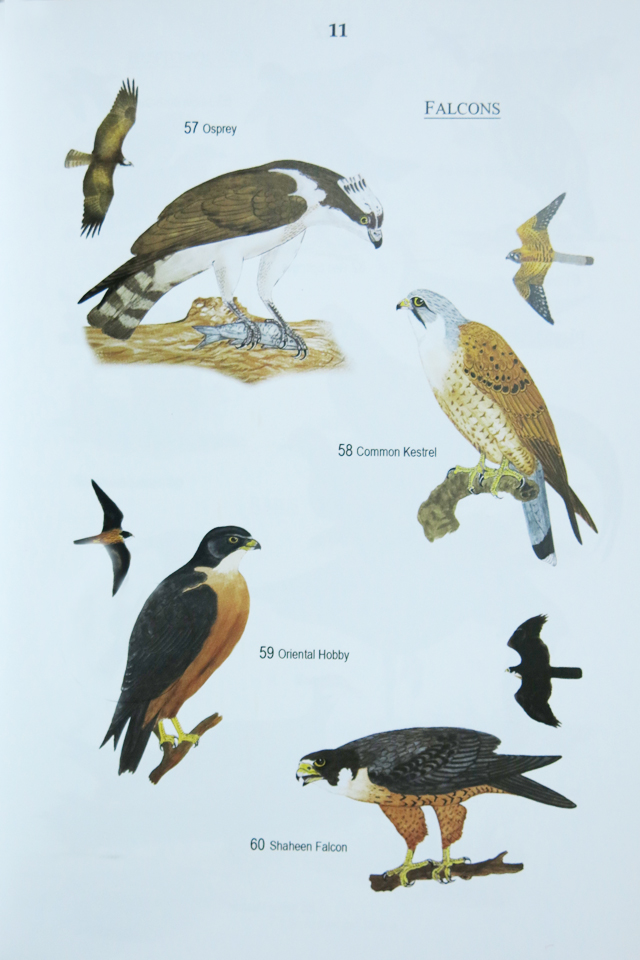
Dr. S V Narasimhan, a doctor by profession, is perhaps known to many for his passion for birds. A resident of Virajpet very familiar with the district coupled with his ability to paint, saw him publish a bilingual book titled ‘Feathered Jewels of Coorg’. A book written and illustrated by the same author was reason enough for him to make it to the record books again.
If you thought being a doctor, an artist and an author is in itself some achievement that should keep him busy, think again. He is a polymath with interests in music, astronomy, and is a photographer too!
For this Coorg special, jlrexplore.com spoke to Dr. Narasimhan.
 Dr. S V Narasimhan
2. Can you describe your early days of birding and how you came to be such an established birder in Coorg?
In those days except some members of the Coorg Wildlife Society (CWS), there were not many birdwatchers in Coorg; there were not many bird books, nor the internet. So it was mostly my own interest in birds that took me to different places to watch them and I made field notes on the birds of Coorg.
3. Many birders fondly remember you for the innumerable greeting cards with colored illustrations of birds that you used to send them each year, for countless number of years. What made you to take to this amazing task?
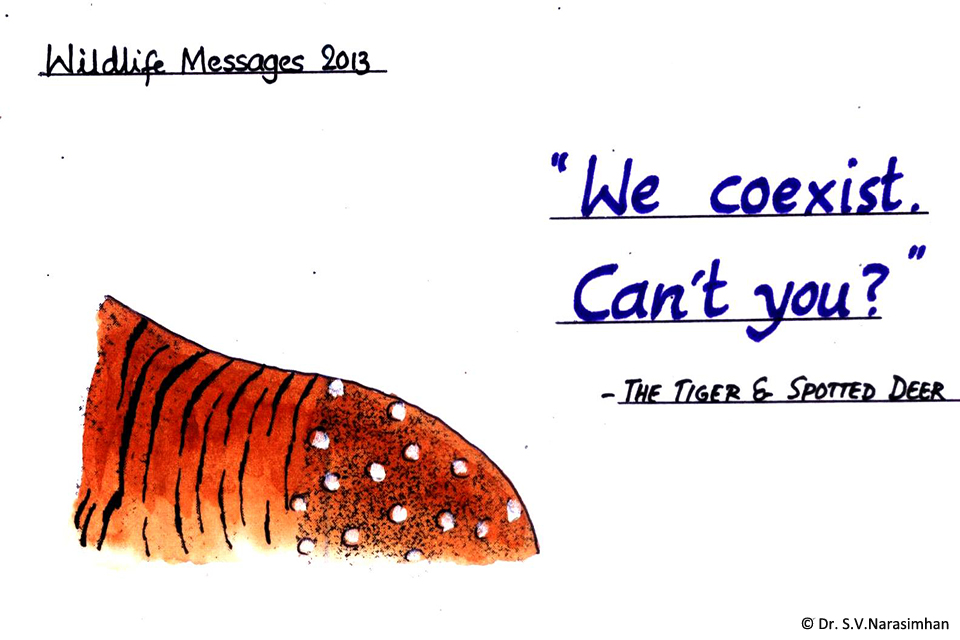
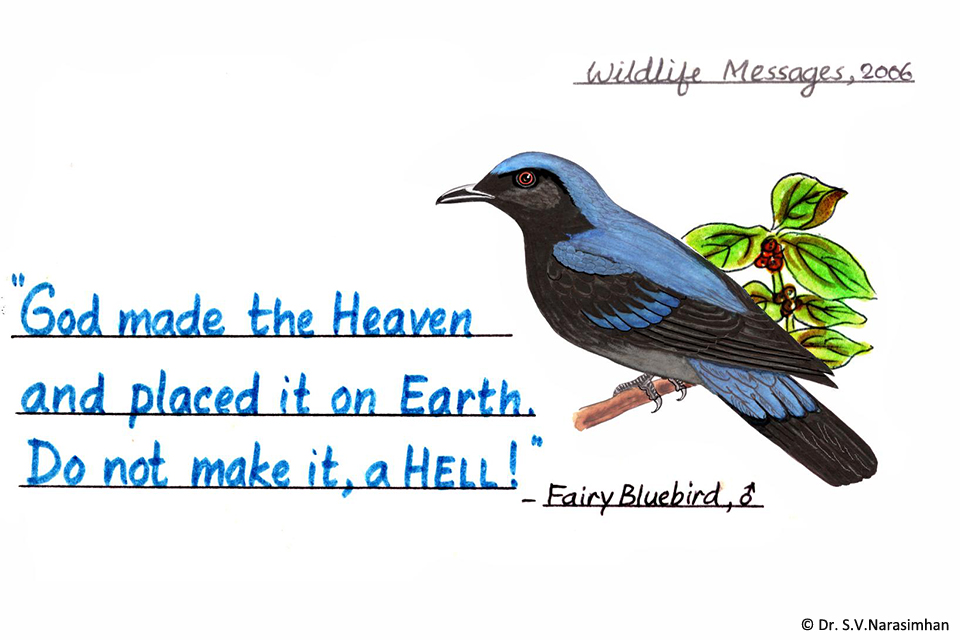
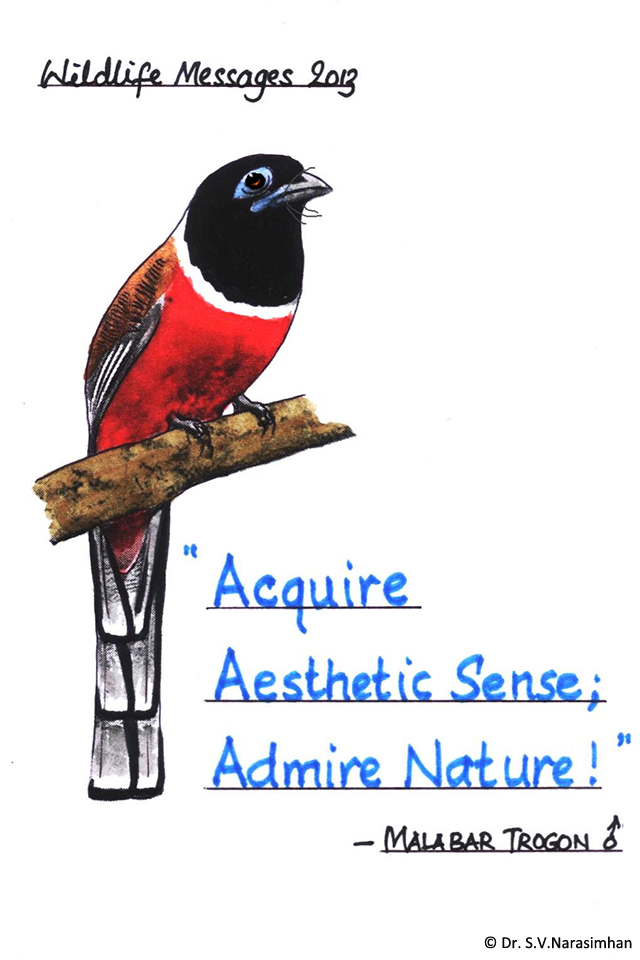
They are not greeting cards. I call them Wildlife Message Cards. Here too, I do not have an interesting story. About 30 years ago some friends and I organized monthly cultural and literary programmes, where we had around one hundred permanent invitees. It was one such October, when I sent hand-written invitations on index cards, along with the illustration of a fawn and a wildlife conservation message. That was an instant success. Many invitees complimented me for the refreshingly innovative way of celebrating Wildlife Week. What started with 120 cards, very soon became a lifetime’s commitment.

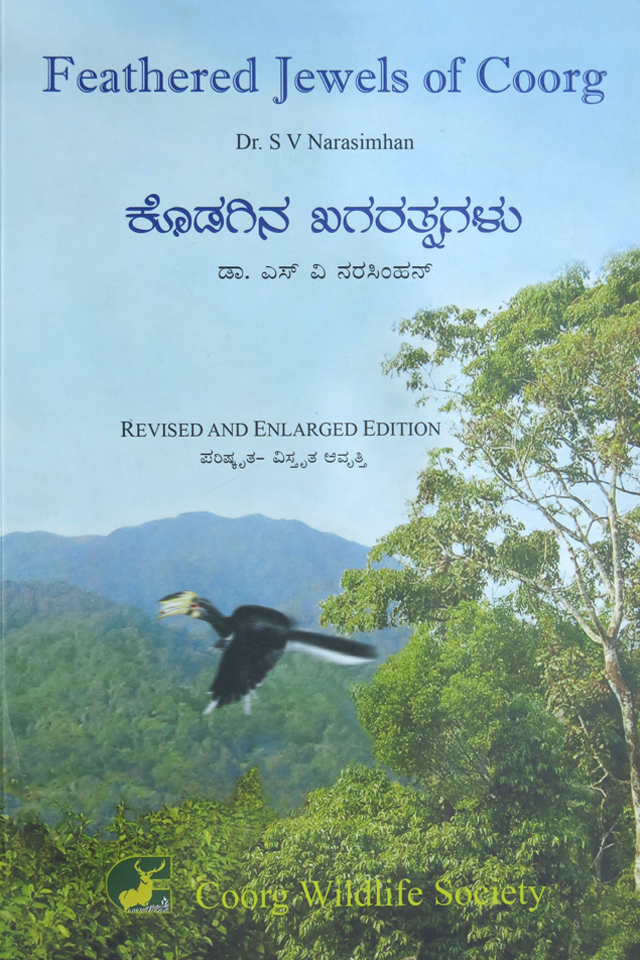
The book also contains the local knowledge database of the birdlife in Coorg. Most of the birds have Kodava names. Interestingly, these birds are not just named after their color or shape. Many are named after their habits or habitat or they are onomatopoeic. The younger generation has realized this and is proud of the keen sense of observation of their forefathers.
With the advent of internet and digital photography, many youngsters have taken up birding as a hobby in Coorg.
8. How has the bird scenario in Coorg changed over the years?
The last decade has seen a vast transformation in the socio-economic development of Coorg. Business has boomed, tourism in the form of resorts, home-stays and adventure sports has sprouted all over. Bird enthusiasts who visit Coorg have identified species that were not documented earlier.
At the same time, not all is well with regards to ecology and birdlife. Townships are becoming concrete jungles, engulfing the surrounding villages. It is development at the cost of erosion of natural treasure. Added with shortage of labor force, and increasing costs of maintaining the coffee estates and paddy-fields, more and more youngsters are lured by city life. Timber and land mafia are slowly taking over the economy of Coorg.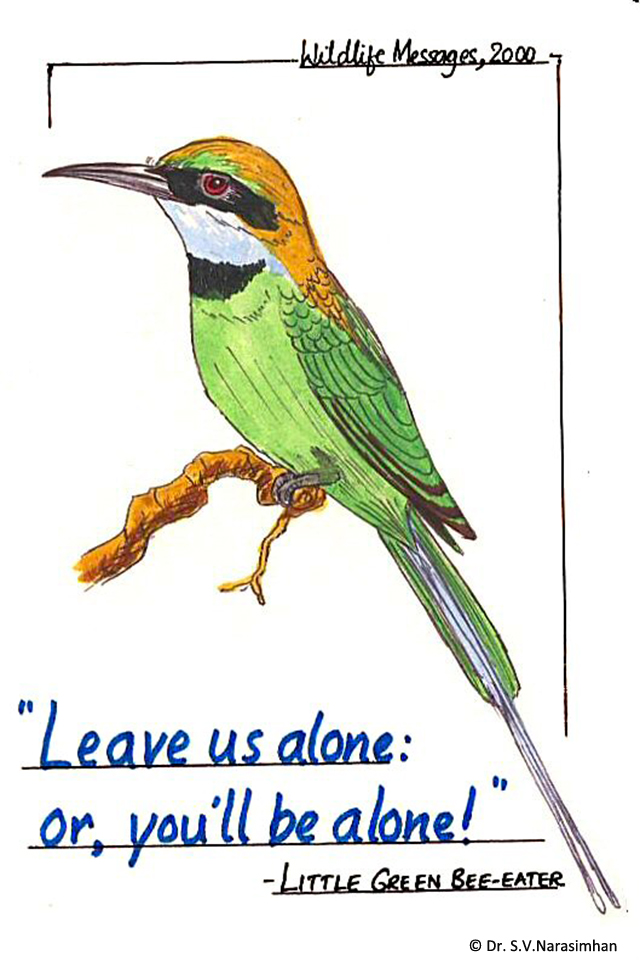
10. What are the tips you want to give to youngsters on birding in Coorg?
- Go with an open mind, be inquisitive, and record observations with the obedience of a student.
- Birdwatching is a direct route to love nature, experience nature and conserve nature.
- Identifying the species of birds in the field is important. But studying and documenting their behavior and their role in nature is the utmost necessity of the hour.
- Strictly follow the rules of the land and respect the local sentiments when you step into reserved forests, sacred groves, paddy-fields or estates.
- Be prepared for surprises.


Instagram